

1. Why proper fire safety equipment matters on a Guyanese worksite
Oil and gas facilities on the East Coast handle flammable materials every day. Construction sites run welding torches, generators, and temporary electrical wiring side by side. Warehouses across Georgetown are stacking more inventory, often flammable goods like paint, chemicals, and packaging, into tighter spaces. During the dry months, even a careless cigarette or an overloaded outlet near stored materials can turn into a serious incident fast.
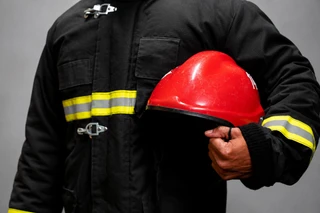
A fire does not just put lives at risk. For a business it means lost stock, downtime, insurance headaches, and if you supply government or oil and gas contracts, it can put your compliance certification on the line. Getting fire safety right from the start is far cheaper than dealing with what comes after.
2. What class of fire extinguisher do you actually need?
Not every extinguisher handles every type of fire, and grabbing the wrong one on the day can make things worse. Here is the breakdown that matters for most Guyanese worksites.
- Class A - for ordinary combustibles like wood, paper, cardboard, and fabric. Common in offices, retail spaces, and warehouses.
- Class B - for flammable liquids and gases such as fuel, oil, paints, and solvents. Important for mechanic shops, generators, and oil and gas sites.
- Class C - for electrical fires involving switchboards, wiring, and motors. Relevant on almost every commercial site given how much temporary electrical work happens during construction.
- Class D - for combustible metals. Not common outside specialised industrial work, but worth knowing if you run metalwork or welding.
- Class K - for kitchen fires involving cooking oils and fats. Needed in any restaurant, cafeteria, or site kitchen.
Most commercial spaces in Guyana are best covered with a multipurpose ABC dry chemical extinguisher, which handles Classes A, B, and C in one unit, like our Buckeye ABC 2.5 lb fire extinguisher. It is a compact option that works well for offices, retail counters, and smaller work vehicles. Larger sites, or anywhere flammable liquids are stored, should size up and add dedicated units near the specific hazard.
3. What fire fighting clothing should your team have?
An extinguisher only helps if the person using it is protected while doing it. This is where a lot of businesses fall short. They have the extinguisher on the wall but nothing for the person who actually has to get close to a fire, hot equipment, or a fire related emergency.
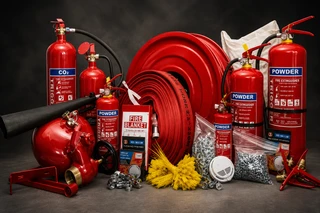
Depending on your operation, that can include:
- Fire resistant coveralls and clothing for anyone working near welding, electrical panels, or flammable materials on a daily basis.
- Fire blankets - quick and effective for smothering a small fire or wrapping around a person whose clothing has caught alight.
- Heat resistant gloves for anyone handling hot surfaces, equipment, or fire response duties.
- Face and eye protection rated for heat and smoke exposure.
We carry a full range under our fire fighting clothing and accessories category, along with our emergency fire blanket and pouch. Worth a look if your current fire kit is just an extinguisher and nothing else.
4. Where should extinguishers be placed, and how often should they be checked?
This is the part most businesses get wrong. Not the buying, the placement and the upkeep.
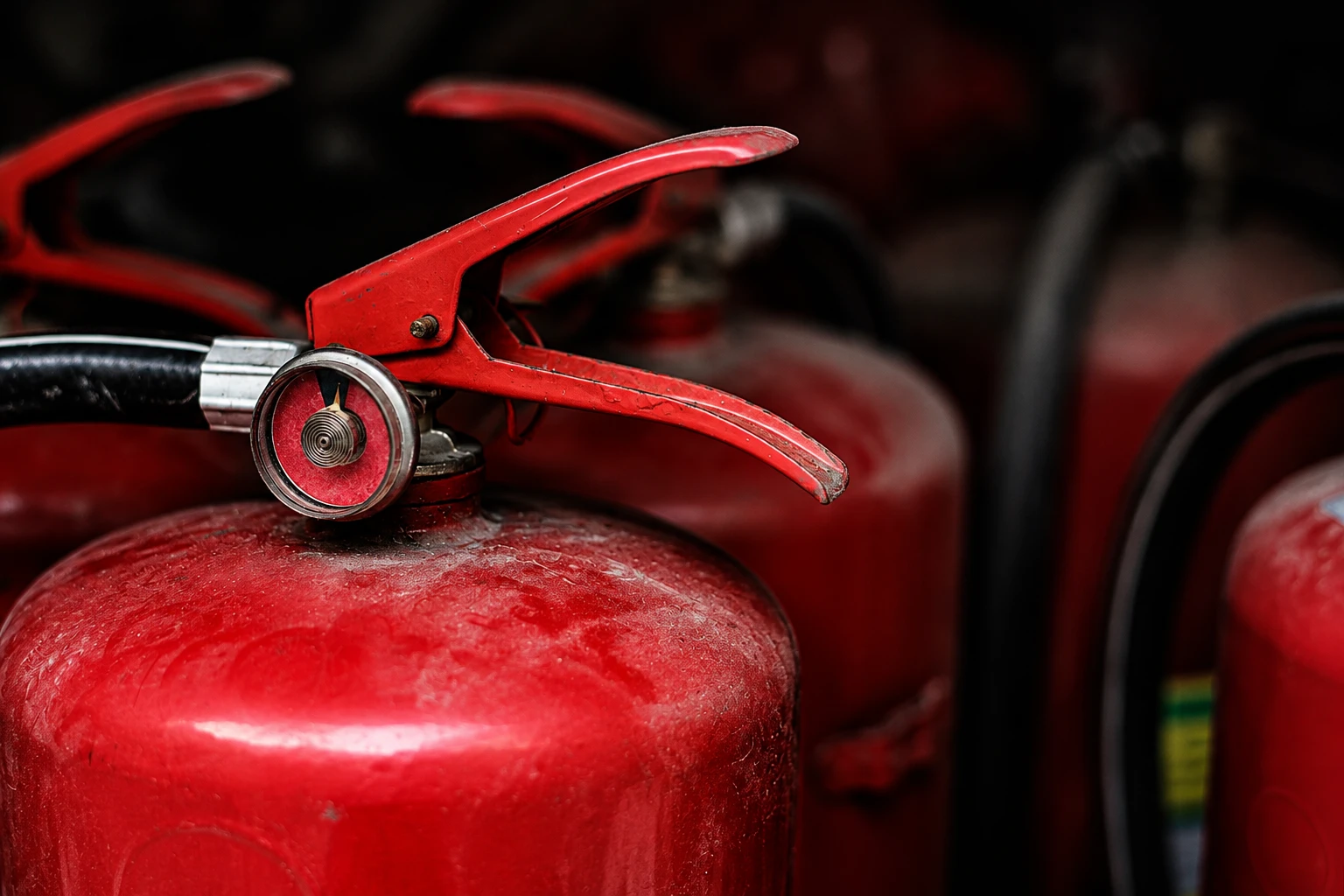
- Keep them visible and reachable. Mount extinguishers where they are easy to see, not tucked behind stock or filing cabinets. Keep them near exits, kitchens, electrical panels, and anywhere flammable materials are stored.
- Height matters. Extinguishers should generally be mounted so the top handle sits no higher than about 1.5 metres from the floor, so anyone can grab it quickly.
- Check monthly. Look at the pressure gauge, check the hose and pin for damage, and confirm the unit has not been tampered with or discharged.
- Service annually. A professional inspection and recharge, where needed, keeps the unit compliant and working when it counts.
- Replace faded signage. Signs fade fast under Guyana's sun. Clear signage, like our 14 in. x 10 in. exit sign, guides staff and customers to safety quickly if smoke fills a space.
5. Your fire safety checklist
If you are setting up fire safety from scratch, or auditing what you already have, work through this list.
| Fire Safety Checklist |
|---|
| ☐ Map your hazards - every area with electrical load, flammable storage, cooking, or heat generating equipment identified |
| ☐ Extinguisher class matched to each hazard - not one ABC unit covering a generator room and a kitchen |
| ☐ Extinguishers mounted at the correct height, visible and unobstructed |
| ☐ Monthly visual checks scheduled - gauge, hose, pin, and tamper seal |
| ☐ Annual professional service and recharge booked |
| ☐ Fire blankets, fire resistant clothing, and heat resistant gloves available for first responders |
| ☐ Exit signage clear, legible, and not faded by sun exposure |
| ☐ Staff trained on how to use an extinguisher under pressure |
| ☐ Inspection log kept for monthly checks and annual servicing |
6. Frequently asked questions
How many fire extinguishers does a small business in Guyana actually need?
At minimum, one appropriately rated extinguisher within reach of every major hazard area - not just one behind the front counter. A small office or retail space might only need one or two compact ABC units near the exit and the electrical panel. A warehouse, workshop, or oil and gas site needs several, sized and classed to the specific risks in each area.
Can I use one ABC extinguisher to cover my whole site?
Not reliably. An ABC unit is a good general-purpose choice, but a generator room, a kitchen, and a chemical storage area each carry different fire risks. Dedicated units placed near the specific hazard, in addition to your general coverage, give you a much better chance of putting a fire out before it spreads.
What happens if an extinguisher is only partially discharged?
Take it out of service and get it professionally recharged before it goes back on the wall. A partially charged extinguisher can look fine on the outside but may not have enough pressure or agent to put out a real fire.
How often should staff be trained on fire extinguisher use?
An annual refresher is a reasonable minimum, with a walkthrough for any new hire before they start. Under pressure, hesitation costs time, so even a short in-house demonstration on the PASS technique - pull, aim, squeeze, sweep - makes a real difference.
Where can I buy fire extinguishers and fire fighting clothing in Guyana?
The Hardware Depot carries a full range of fire safety equipment in Guyana, including extinguishers, fire fighting clothing, fire blankets, and exit signage. We are located in Georgetown and available to help you put together the right setup for your site.
More from The Hardware Depot
Guyana's growth brings opportunity, but it also brings more equipment, more people, and more fire risk on site every year. Businesses that get ahead of it now will be the ones that avoid the downtime, the losses, and the compliance problems later. Fire extinguishers, fire fighting clothing, safety signage, and the full PPE range are in stock at The Hardware Depot in Georgetown, alongside:
- All safety and PPE equipment in Guyana
- Fire fighting clothing and accessories
- First aid and wound care
- Signs and facility identification products
- Contact us
Setting up fire safety for your site or business in Guyana?
Fire extinguishers, fire fighting clothing, fire blankets, and exit signage are in stock at The Hardware Depot in Georgetown. Bulk and site pricing is available.