

1. Why fall protection is different from other safety equipment
Most PPE and safety equipment is reactive. Gloves, boots, and respirators reduce the harm when contact with a hazard happens. Fall protection is different. When it works, the worker never reaches the lower level at all. When it does not work - because it is missing, damaged, or set up incorrectly - the consequences are usually catastrophic.
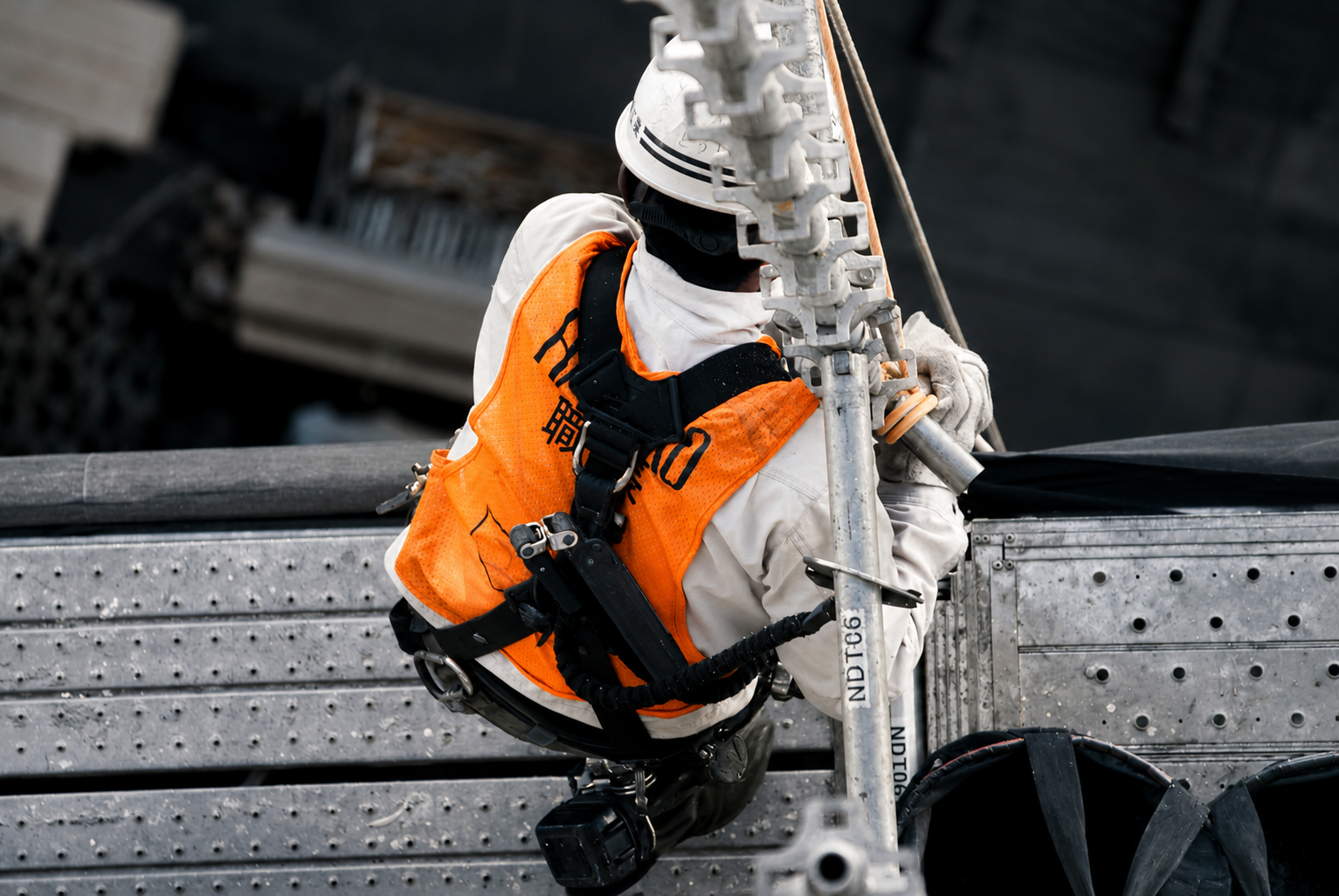
That is what makes fall protection the one area where close enough is never good enough. There are three things every employer needs to do before anyone goes up on a roof or scaffold:
- Plan - Know the pitch of your roof, the height of your work surface, and which protection system is appropriate for the job. A low-slope flat roof and a steep residential pitch need different approaches.
- Provide - Source the right fall protection equipment and make sure it is on site before work begins. The right harness, the right lanyard length, the right anchor rated for the load. None of this can be improvised on the day.
- Train - Make sure every worker using fall protection knows how to inspect it, fit it correctly, and use it as intended. Gear that is not worn properly is as dangerous as no gear at all.
2. Understanding your fall protection options
There are several approaches to fall protection on construction and roofing sites. The right choice depends on the type of work, the height, and the configuration of the roof or structure.
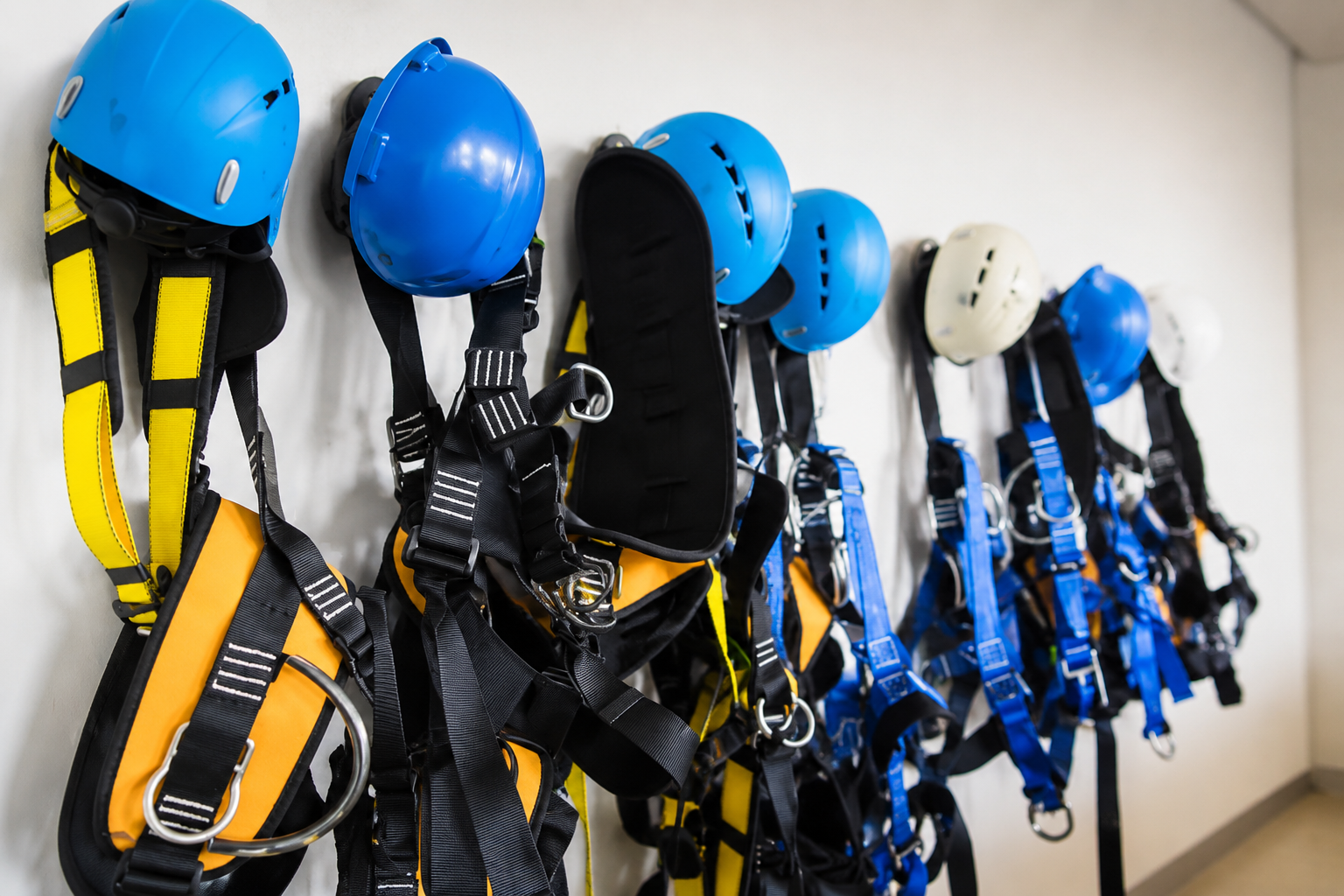
Personal fall arrest systems
This is the most common form of fall protection for construction workers in Guyana. A personal fall arrest system has three components:
- An anchor point fixed to a structural member, rated to support the load
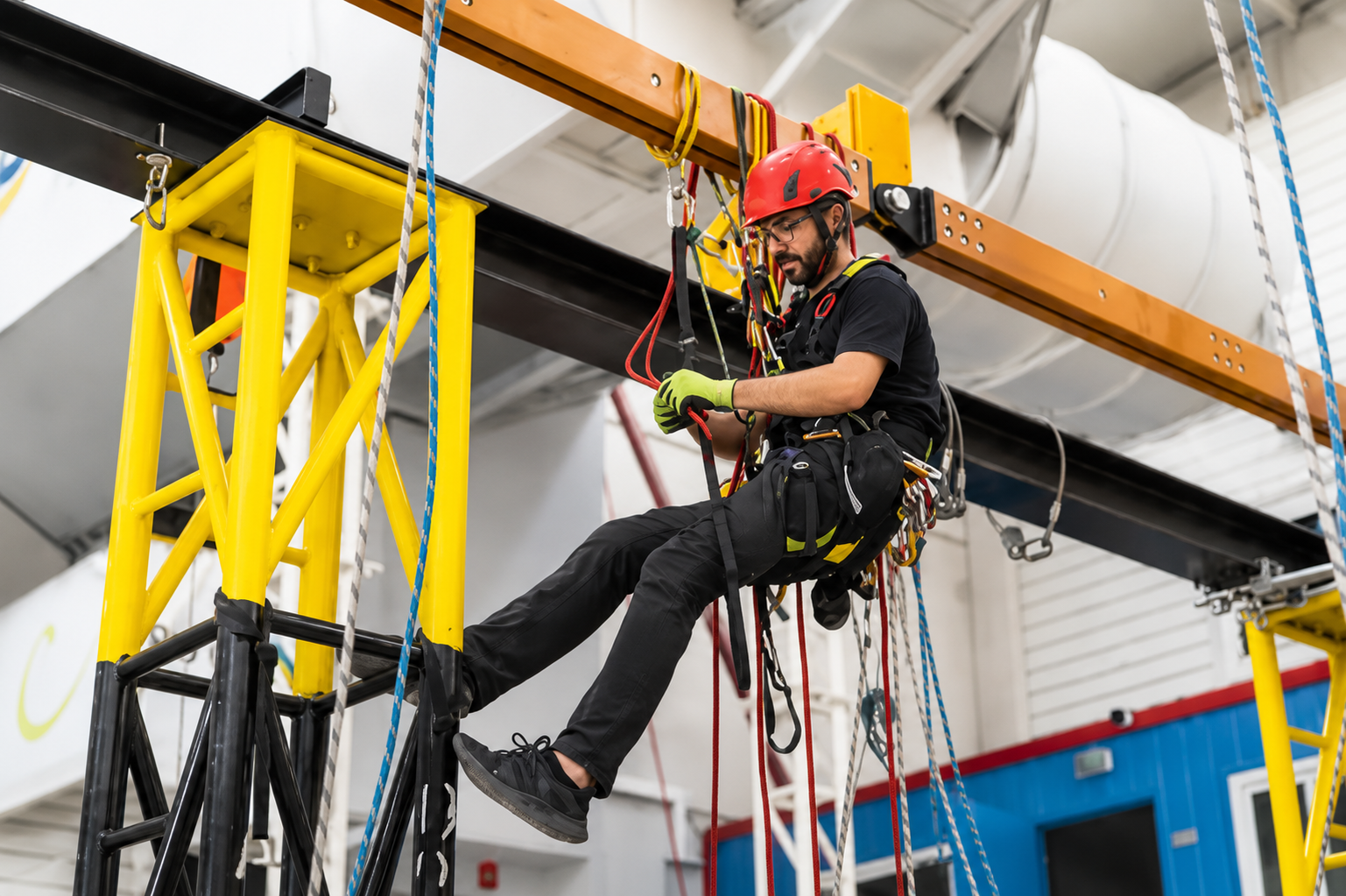
- A full-body harness worn by the worker
- A connector - a shock-absorbing lanyard or self-retracting lifeline - linking the harness to the anchor
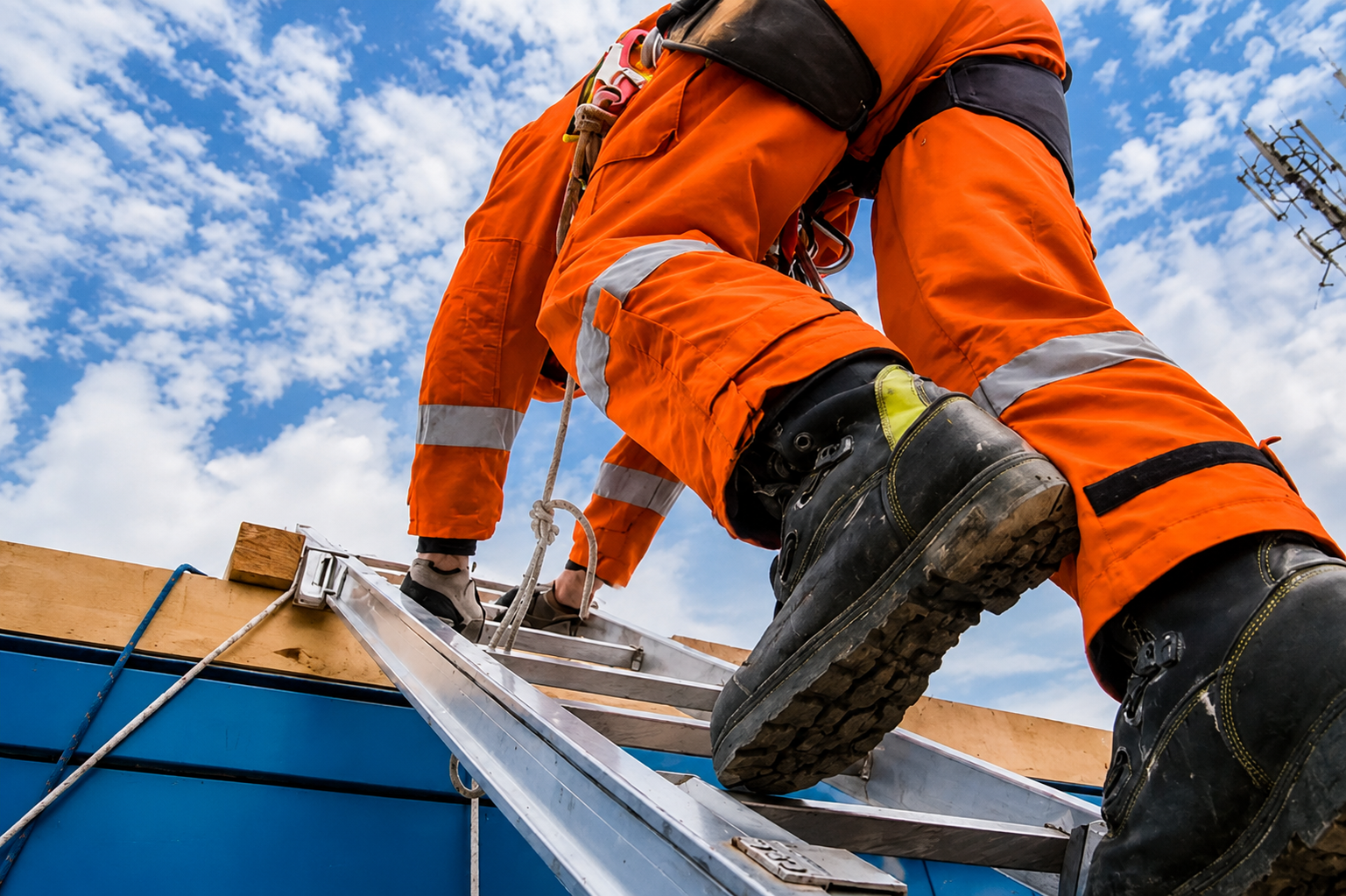
The harness must fit properly. The D-ring should sit centred between the shoulder blades. Leg straps should be snug. A harness worn loosely can shift during a fall and cause serious injury even if the system arrests the fall.
The anchor point matters more than people realise. You cannot attach an anchor to roofing sheathing alone, a single rafter, or most temporary guardrails. The anchor must be fixed to a structural member, typically by driving fasteners through the sheathing and into the rafter or truss below. Always follow the manufacturer's instructions when setting up anchorage.
Calculating total fall distance
One of the most common mistakes in setting up a fall arrest system is not calculating the total fall clearance distance before work begins. This is the minimum vertical distance needed between the worker and the lower level to ensure they do not make contact during a fall. The total fall distance is made up of several factors:
- Free fall distance - how far the worker falls before the system begins to decelerate them
- Deceleration distance - how far the lanyard stretches while absorbing the energy of the fall
- D-ring shift - how far the back D-ring drops when the full weight of the worker is suspended
- Back D-ring height - the distance from the D-ring to the sole of the worker's boot
- Safety margin - an additional clearance buffer, typically a minimum of two feet
Add these values together and the result tells you the minimum height clearance you need. If your work surface does not provide that clearance, you need a different system or a shorter lanyard. This calculation must happen before the job starts.
Swing-fall hazard is another factor that is often overlooked. If the anchor point is beside the worker rather than directly above the work area, a fall can cause the worker to swing like a pendulum into a wall or structural element. The safest anchor position is always up the roof slope from the worker, directly above the work area.
Fall restraint systems
A fall restraint system works differently from a fall arrest system. Instead of stopping a fall in progress, it prevents the worker from reaching the roof edge in the first place. The lanyard length is set so that the worker physically cannot get close enough to the edge to fall. Workers must be trained on how to determine the correct lanyard length before starting work. If the lanyard is too long, the system does not provide the protection it is supposed to.
Guardrail systems
On flat or low-slope roofs, perimeter guardrails can provide fall protection without requiring individual workers to wear harnesses. Temporary guardrail systems that attach to structural members are available commercially and are increasingly used on commercial roofing projects in Guyana. For guardrail systems to be effective, the top rail must be at the correct height above the working surface, intermediate members such as midrails or screens must be installed when there is no wall or parapet to provide that protection, and the system must be rigid enough to withstand outward force applied at the top edge.
Warning lines
On low-slope roofs, a warning line system can be used in combination with other protection methods. Warning lines consist of ropes, wires, or chains supported by stanchions, erected at a safe distance back from the roof edge - a minimum of six feet from the edge for most work and ten feet when mechanical equipment is in use. The lines must be flagged at regular intervals with high-visibility material so they are clearly visible at all times. Warning lines are not a standalone fall protection system - they must be combined with guardrails, personal fall arrest, safety nets, or a designated safety monitor.
Covers for skylights and roof openings
Skylights and other openings in a roof surface are fall hazards that are easy to overlook. Covers must be strong enough to support the weight of workers, equipment, and materials that might be placed on them - at minimum rated for twice the maximum expected load. They must be secured so they cannot be accidentally displaced by wind or moved equipment, and they must be clearly marked, labelled HOLE or COVER, so no worker mistakes them for a solid surface.
3. Ladder safety on roofing sites
Ladders are the most common way to access upper work levels on roofing sites, and they are also the source of a significant number of fall incidents. Extension ladders and stepladders are the two types you will find on most Guyanese construction jobs.
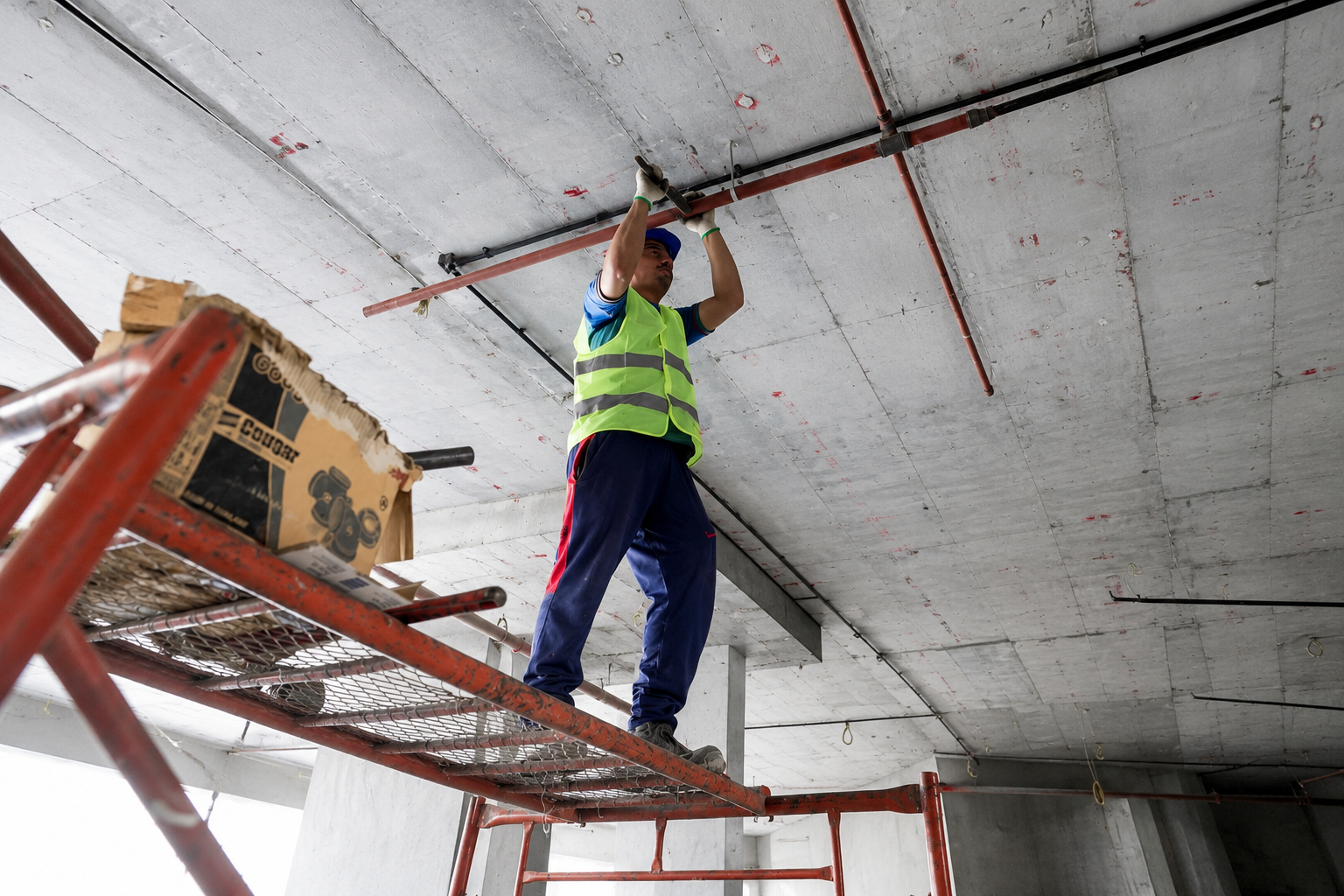
- Three points of contact at all times. When climbing or descending a ladder, workers should have two hands and one foot, or two feet and one hand, in contact with the ladder. Tools go up separately, in a bucket on a rope, or carried by another worker once the climber is on the roof.
- Extension ladders need the right angle. The correct ratio is 1 to 4 - for every four feet of working length, the base should be one foot out from the wall or structure. At a steeper angle, the ladder can tip backward; at a shallower angle, the feet can slip out.
- Side rails should extend above the landing. Extension ladder side rails should extend at least three feet above the upper landing surface, giving something to hold on to during the transition from ladder to roof.
- Stepladders must be fully open. Workers must never stand on the top step or the top of a stepladder - it is not designed to support weight there.
- Ladder feet need secure footing. Ladders must be placed on stable, level surfaces. On Guyana's construction sites, where ground conditions can include loose fill, mud, or uneven surfaces, it may be necessary to take extra steps to create a secure base before putting a ladder up.
4. Scaffolding: what to check before work begins
Scaffolding is common on larger construction and commercial roofing projects in Guyana. The most important things to verify before anyone steps on a scaffold:
- It must be designed and built by a qualified person. Scaffolding is not something to improvise. The design must account for the load it will carry, including workers, equipment, and materials combined.
- Workers are most at risk getting on and off. Scaffold access is a frequent source of falls. When platforms are more than two feet above or below a point of access, proper access equipment must be provided - not just the nearest board or makeshift step.
- Platforms must be fully planked. There should be no gap wider than one inch between adjacent platform units, or between the platform and the uprights, unless operationally necessary.
- Guardrails are required on scaffolds above ten feet. Toprails must be installed along all open sides and ends of platforms, at the correct height above the platform surface, with midrails installed midway between the top rail and the platform surface.
- Debris and tools must be controlled. If tools, materials, or equipment can fall from a scaffold and hit workers below, the area beneath must be barricaded. Toeboards are required along platform edges to prevent objects from being kicked off.
5. Aerial lifts and forklifts
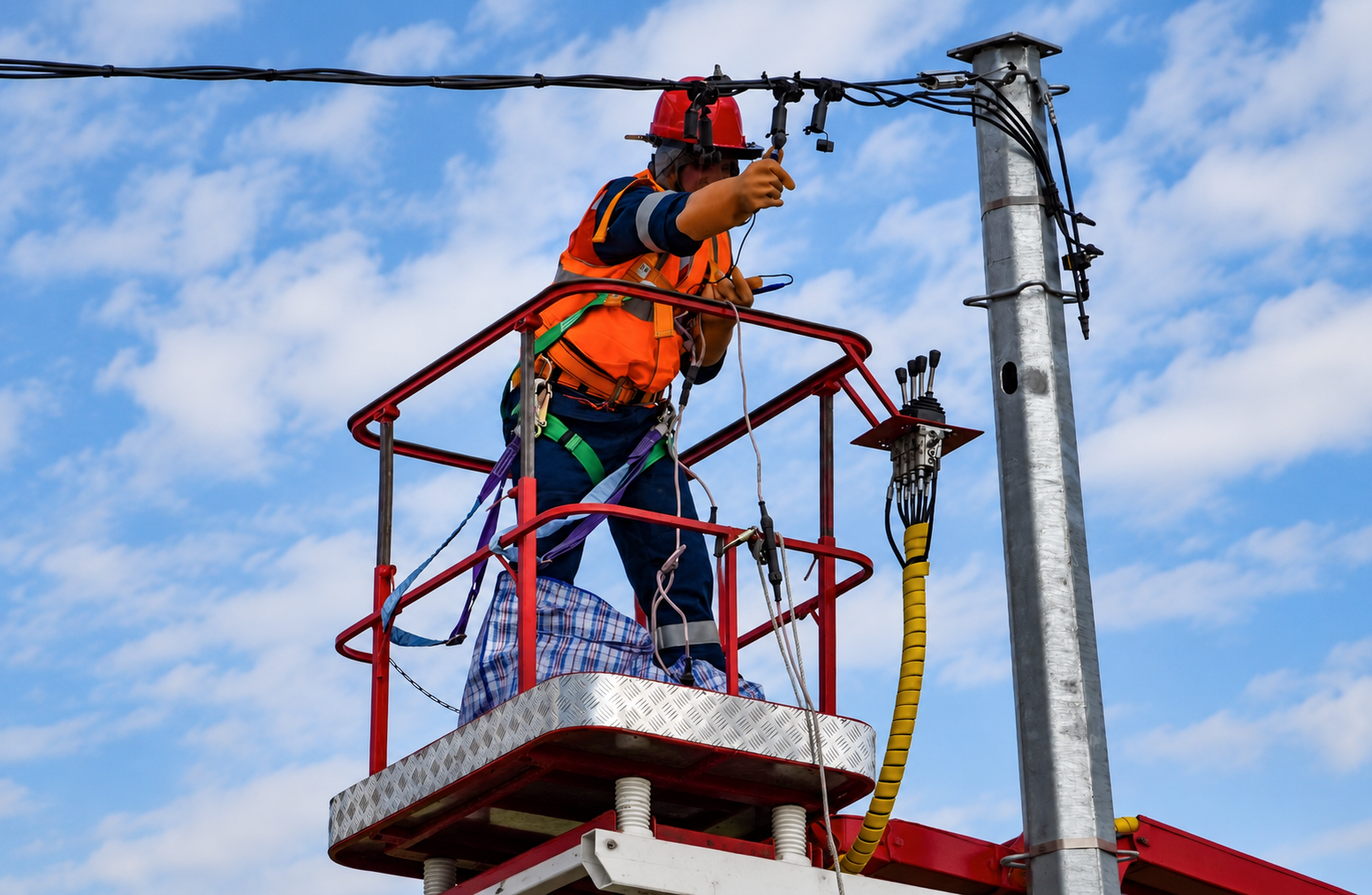
On some commercial and industrial roofing projects, aerial lifts or boom platforms are used to access the roof edge from outside the building. A few points for operators and site supervisors:
Workers in the lift basket must stand firmly on the basket floor - not on the edge, not on planks placed across the basket, and not on a ladder resting inside the basket. They must also be tied off to the boom or basket itself.
Forklift operators who raise workers in man-baskets must be trained and authorised. The man-basket must be approved by the manufacturer for this use and must be firmly secured to the lifting carriage.
6. PPE for roofing work beyond fall protection
Fall protection is the primary safety concern on roofing sites, but it is not the only one. Roofing workers are also exposed to the following hazards.
- Eye and face hazards - Grinding, cutting, nail guns, and debris all create serious eye hazards. Impact-rated eye protection and safety glasses are the minimum; face shields are needed for cutting and hot work.
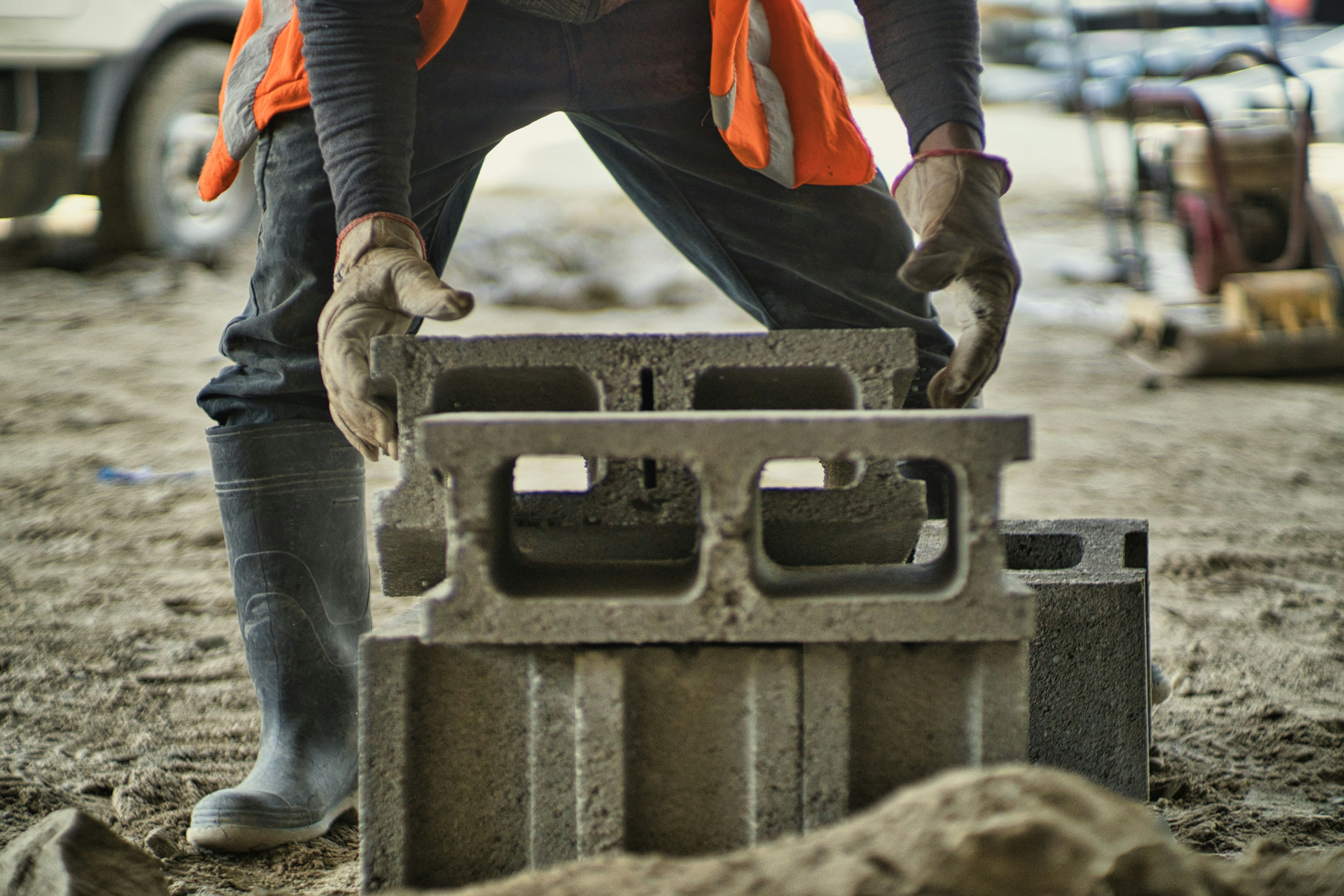
- Hand hazards - Handling sheet metal, roofing materials, and hot tar all require appropriate work gloves and hand protection - general gloves for material handling, heat-resistant gloves for hot works.
- Foot hazards - Slips, punctures from roofing nails, and falling objects make slip-resistant safety boots with puncture-resistant soles essential.
- Head hazards - Falling objects, low clearances, and structural impact make a safety helmet or hard hat standard issue for anyone on or below a roofing operation.
- Respiratory hazards - Dust from concrete and tile cutting, fumes from adhesives, and on older buildings, potential exposure to asbestos or lead all require appropriate respiratory protection matched to the specific airborne hazard.
- Heat illness - Especially relevant in Guyana's climate. Roofing is outdoor, often exposed work, and heat exhaustion and heat stroke are real risks during peak hours. Supervisors should plan work schedules around the hottest parts of the day and ensure workers have regular access to cool water and covered rest areas.
- Protective clothing - Hi-vis vests and protective clothing are required for any work near moving machinery or vehicles; flame-resistant coveralls for hot tar operations, and long cotton clothing without cuffs around molten materials.
7. Site housekeeping and emergency readiness
Keep the work area clear. Air hoses, electrical cords, and loose tools left across a roof surface are trip hazards. Tools that roll off a roof edge become falling object hazards for workers below. Tools not in use should be secured or stored, not left on a slope.
Post the site address prominently so workers can direct emergency services to the exact location if needed. First aid supplies must be accessible on site at all times. Stock a fully equipped first aid kit before work starts, not after an incident.
8. Your pre-job fall protection checklist
Before any roofing or elevated work begins, run through this list.
| Pre-Job Fall Protection Checklist |
|---|
| ☐ Roof pitch and height assessed, correct fall protection system selected for the conditions |
| ☐ Total fall clearance distance calculated, confirms selected lanyard and system is appropriate |
| ☐ Anchor points identified and rated, attached to structural members not sheathing alone |
| ☐ Full-body harnesses inspected and correctly fitted to each worker |
| ☐ Lanyards and connectors inspected, shock absorbers undamaged, snap hooks functional |
| ☐ Any equipment that has previously arrested a fall taken out of service |
| ☐ Ladder secured with correct angle and base footing, side rails extended above landing |
| ☐ Scaffold checked: fully planked, guardrails in place, access clear |
| ☐ Roof openings and skylights covered and marked |
| ☐ Eye, hand, foot, and head protection issued and matched to tasks |
| ☐ Water, shade, and rest area in place for heat management |
| ☐ Fire extinguisher on site for any hot works |
| ☐ First aid kit stocked and location known to all workers |
| ☐ Rescue plan in place for suspended worker scenario |
| ☐ Site address posted so emergency services can be directed immediately |
9. Frequently asked questions
At what height does fall protection become mandatory on a construction site in Guyana?
The international benchmark followed by most Guyanese operators and international contractors working here is six feet, approximately 1.8 metres, above a lower level. At this height and above, workers must have adequate fall protection in place before beginning work.
What is a langard and is it the same as a lanyard?
Langard is the local Creolese term for lanyard or fall-arrest strap. It is the connector that links your harness to the anchor point. Whether you call it a langard or a lanyard, the same inspection and replacement rules apply: inspect before every use, replace if any webbing is frayed, stitching is damaged, snap hooks are stiff or corroded, or if the shock absorber has been deployed in a real fall. Browse our full range of langard and fall protection equipment at The Hardware Depot.
Can I use a body belt instead of a full-body harness?
No. A body belt is not acceptable as part of a personal fall arrest system. In a real fall, a body belt concentrates all the arrest force on the worker's midsection and can cause serious internal injuries. A full-body safety harness distributes the force across the shoulders, chest, and thighs, and it is the only acceptable option.
What should I do with fall arrest equipment after it has stopped a fall?
Take it out of service immediately and do not return it to the equipment pool. Even if the harness, lanyard, and anchor all look undamaged, the materials may have been stressed in ways that are not visible. A competent person must inspect all components before any of it can be used again. In practice, shock-absorbing lanyards that have deployed should usually be replaced, not re-certified.
How often should harnesses and lanyards be formally inspected?
At minimum, annually, and before every single use as a quick visual check. Workers should be trained to look for frayed webbing, damaged stitching, corroded or stiff hardware, and any sign that a shock-absorbing pack has deployed. If in doubt, do not use it.
Where can I buy fall protection equipment in Guyana?
The Hardware Depot carries a full range of fall protection equipment in Guyana, including safety harnesses, lanyards, and anchorage equipment, all sourced to recognised international safety standards. We are located in Georgetown and available to help you build the right setup for your site.
More from The Hardware Depot
Harnesses, lanyards, anchorage equipment, and the full PPE range are in stock at The Hardware Depot in Georgetown, alongside:
- All safety and PPE equipment in Guyana
- Safety boots
- Hand protection
- Head protection and hard hats
- Contact us
Outfitting a crew for a roofing or construction project in Guyana?
Harnesses, lanyards, anchorage equipment, and the full PPE range are in stock at The Hardware Depot in Georgetown. Bulk and site pricing is available.